


FOREIGN INVESTORS STORM BACK TO DALAL STREET WITH MASSIVE FEBRUARY INFLOW

By N.Niharika
Introduction: A Strong Comeback of Global Investors
After months of uncertainty and heavy selling, foreign investors are once again showing confidence in the Indian stock market. In February 2026, global investors made a strong comeback by investing a large amount of money into Indian equities. This sudden surge in investment has caught the attention of market experts and signals renewed faith in India's economic growth story.
Foreign Portfolio Investors (FPIs) invested ₹22,615 crore in Indian equities during February, marking the highest monthly inflow in the last 17 months. The inflow reflects growing optimism among global investors about India’s economic stability, improving corporate performance, and better market opportunities.
This shift is particularly significant because foreign investors had been pulling money out of Indian markets for several months before February.

Source: GoodReturns
Why Foreign Investors Are Returning to Indian Markets
The strong inflow of foreign funds in February happened due to several positive developments in the Indian economy and financial markets.
1. Attractive Stock Market Valuations
Indian stock prices had corrected after earlier highs, making many companies more reasonably valued. This encouraged global investors to buy Indian equities again.
2. Strong Corporate Earnings
Many Indian companies reported strong quarterly earnings, which increased investor confidence in the country’s growth potential. Good financial performance signals that businesses are expanding and profits are improving.
3. Reduced Global Trade Uncertainty
Easing global trade tensions and improving international economic conditions also helped improve investor sentiment. When global uncertainty reduces, foreign investors are more willing to invest in emerging markets like India.
4. Reversal After Months of Selling
Before February, foreign investors had been withdrawing money from Indian equities for several months. For example, they had pulled out ₹35,962 crore in January and ₹22,611 crore in December, reflecting cautious sentiment earlier. The February inflow therefore marks a turning point in investment trends.
5. Investments in Debt Markets
Apart from equities, FPIs also invested about ₹5,380 crore in Indian debt markets, increasing total foreign investment in India’s capital markets during the period.
Inflows Reverse Earlier Outflows

The recent inflow of foreign money into Indian equities comes after several months of continuous withdrawals by Foreign Portfolio Investors (FPIs). In the months before February, foreign investors had been steadily pulling money out of the market. They withdrew ₹35,962 crore in January, ₹22,611 crore in December, and ₹3,765 crore in November, showing a cautious approach toward Indian stocks.
Even though February saw a strong recovery in investments, the overall picture for 2025 still reflects a challenging period. So far, FPIs have withdrawn a total of ₹1.66 lakh crore (about $18.9 billion) from Indian equities, making it one of the most difficult phases for foreign participation in recent years.
The earlier selling happened due to several global and domestic concerns. Investors were worried about currency fluctuations, rising global trade tensions, the possibility of new tariffs from the United States, and high stock market valuations in India. However, the recent return of foreign investors has been supported by some positive developments. A temporary trade understanding between India and the United States, more reasonable stock valuations, and strong corporate earnings growth have improved investor confidence. In fact, companies reported a 14.7% growth in earnings during the third quarter of FY26, which reassured investors about India’s strong economic growth prospects.
Key Sectors Driving the Recent FPI Buying in Indian Markets
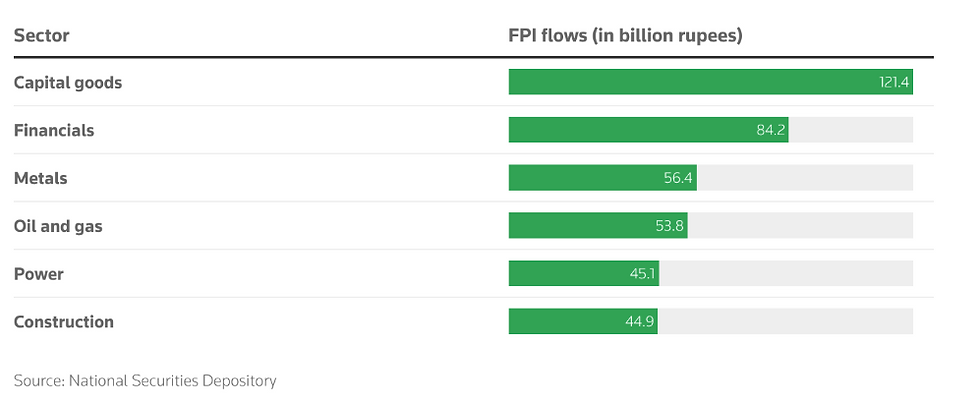
Several sectors in India have recently attracted strong interest from Foreign Portfolio Investors (FPIs), particularly capital goods, financial services, metals, and energy. These sectors have shown improving business performance, with many companies reporting better-than-expected earnings. Strong demand for infrastructure, industrial growth, and stable performance in banking and financial institutions have increased investor confidence. As a result, foreign investors see these sectors as important drivers of India’s economic growth and long-term investment potential.
The renewed foreign buying also reflects optimism about India’s overall market outlook. Despite some temporary effects from the implementation of new labour codes, companies in these sectors have continued to maintain solid earnings and growth prospects. Because of their strong fundamentals and role in supporting economic expansion, capital goods, financials, metals, and energy have become key areas where FPIs are increasing their investments in the Indian market.
Can the Iran–Israel Conflict Change This Trend?

Source: ETBFSI
Although foreign investors invested heavily in Indian equities in February, experts believe that the ongoing Iran–Israel conflict could affect this positive momentum. Geopolitical tensions usually create uncertainty in global financial markets, which makes investors more careful about where they invest their money.
Because of the rising tensions in the Middle East, many foreign investors may prefer to take a “wait-and-watch” approach before making further investments. Instead of immediately putting more money into markets like India, they may observe how the situation develops and how it impacts global markets.
Another important factor is the possible rise in crude oil prices due to the conflict. Since India imports a large portion of its oil, higher oil prices can increase inflation and put pressure on the economy. This could make foreign investors slightly cautious about investing more in Indian equities.
During periods of global conflict and uncertainty, investors often move their money toward safer assets such as gold or US government bonds. This shift in investment preference can reduce the flow of foreign funds into stock markets, which means the recent surge in foreign investments in India could slow down or temporarily reverse.
Conclusion
Foreign investment in February shows renewed global confidence in the Indian stock market after months of selling. Positive factors like attractive valuations and strong corporate earnings encouraged investors to return. However, global uncertainties and geopolitical tensions may influence future investment decisions. Events such as the Iran–Israel conflict and rising oil prices could make investors cautious. Overall, the continuation of this trend will depend on global stability and India’s economic performance.


Comments